Showing posts with label April. Show all posts

Monday, April 27, 2026

Bermuda grass green up


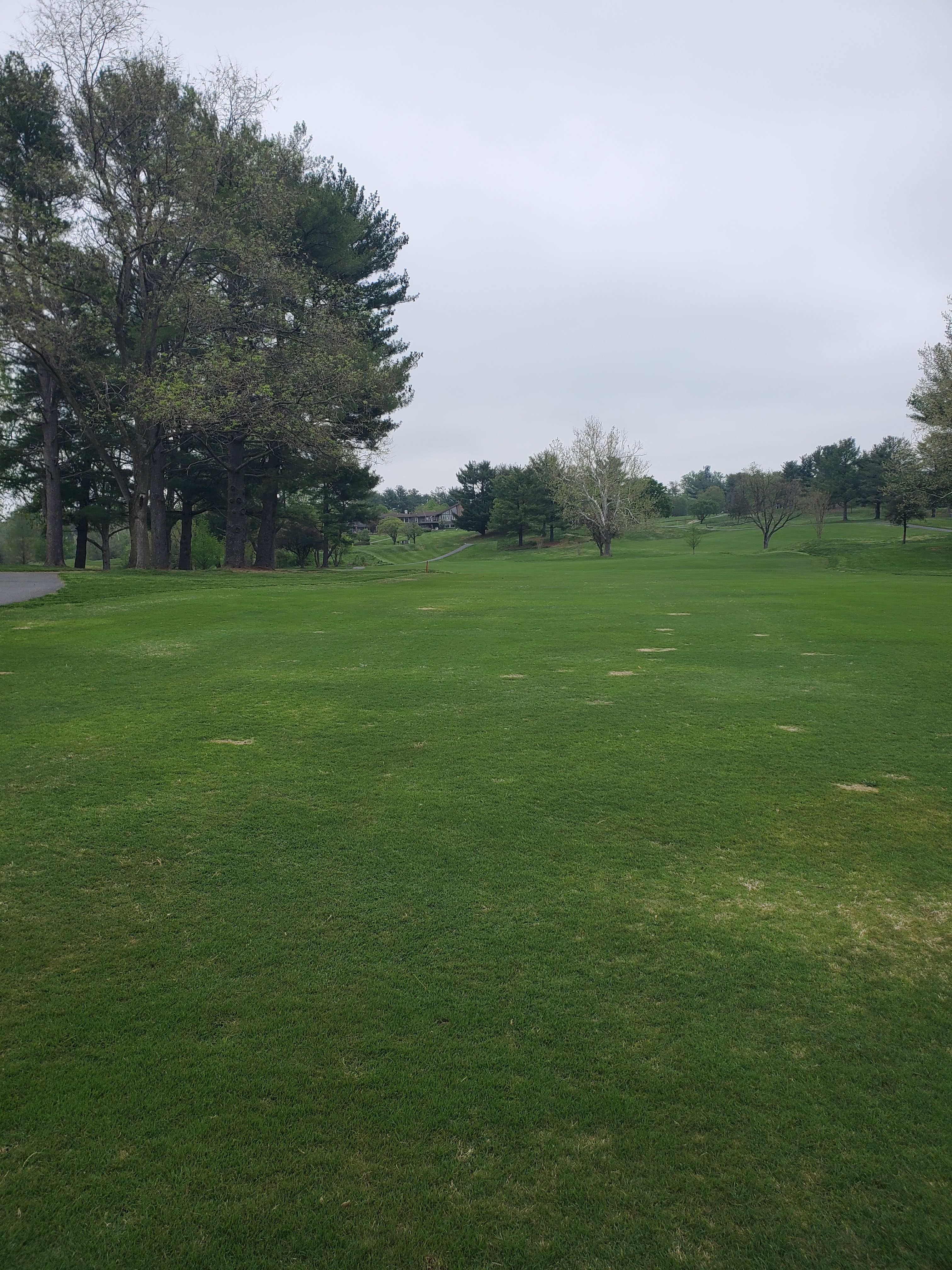
It seems like the last several blogs have all started with a recap of how changeable the weather has been. And that changeable weather has played tricks on the Bermuda grass some more. Overall, the Bermuda grass is very healthy and will get its green color back, but last week’s cold night (26 degrees!) postponed any quick start to its growing season.

Breaking dormancy for any turf is a process that can’t be rushed. More importantly, it can’t really be controlled either. We have a few tactics that we employ, more so in the fall than in the spring, to help aid the Bermuda grass, but Mother Nature is in charge and we must adapt.

Watching the Bermuda grass green up each season can be fast and slow at the same time! Sometimes it feels like the fairways and tees will never be in mid-summer form when enduring spring days of 50-degree highs and mid 30’s overnight. Then suddenly, just like this year, we hit a few upper 70 or higher degree days and- boom- the Bermuda grass seems to fill in overnight. Recently, the USGA published a short time-lapse video of Bermuda grass greening up in spring in North Carolina and it helps to illustrate the process the turf goes through and that it is not always a linear process. You can watch the video here: https://www.usga.org/content/usga/home-page/course-care/green-section-record/64/issue-07/spring-greenup--a-turfgrass-transformation.html

After watching the video, there were a couple of things that stood out to us. First, high traffic areas don’t green up nearly as fast as other spots. Especially areas just off greens where foot traffic concentrates walking on and off greens. There are a couple of areas that aren’t even fully green within the timeframe of the video, even in a considerably warmer climate than ours. This is very similar to several of our trouble spots- like 3, 14, and 15 approaches. While traffic isn’t the only issue, it is clear from this video that it is a significant factor.


A photo looking back down 10 fairway

The second key detail we noticed from the video relates to drainage, which we got a glimpse of from the rainstorms that occurred during the video. Areas where water puddled or was slower to drain or move off the surface are places where green up was slow again. In the video, some of the same areas that had concentrated wear were also slow to drain. This relates to compaction stemming from the increased traffic. We can draw similarities from the course in the video to Bretton Woods again relating to drainage. The same trouble areas in the approaches are areas where water has been slow to drain. Even if the area is sloped, the soil is poor enough that it becomes waterlogged and can’t dry down. This is especially bad during the winter months, when freezing temperatures can kill overly hydrated Bermuda grass.

Over the last several years, we have worked to install drainage in these specific locations- 3 approach was done a few years ago, 14 approach 2 years ago, and 15 approach was completed this past fall. Although the drains haven’t solved the issue- we still have repair work to do in all these areas- it has improved our chances of Bermuda grass survival. We have also started a deep aeration program aimed at these spots in particular using our vertical aerating machine  which will help open the soil down much deeper than regular aeration. The Verti-quake is literally a very slow machine- we must drive just under 1 mph- but it is also a slow process to change soil structure, so it doesn’t cure conditions overnight, but coupled with our compost program , we are on the right track. (Note- the blog post discussed the Shockwave, but we purchased an identical machine from a different manufacturer called the Verti-quake)

Although the Bermuda grass has a yellow hue right now, it won’t last all season. As daytime temperatures and soil temperatures climb up to their summer peaks, the turf will naturally regain its color. And we will be working alongside making sure we are helping in any way possible.


Etiquette Reminder of the Month

Please keep carts on cart paths for the entirety of par 3 holes.

Also, as part of a Golf Committee initiative to improve course etiquette, we have included links to videos teaching proper on course etiquette. Please take a moment to watch:

Ball Marks - How to properly repair

Golf Cart tips


See you on the course!

Joe

jvillegas@bwrc.org


Monday, April 20, 2026

Upcoming compost application

Spring is progressing in a typical up and down fashion. Some way above normal temperatures last week, followed by closer to normal, and this week will start with a night below freezing. This can wreak havoc on the Bermuda grass. One of our core strategies to help the Bermuda grass deal with all this stress it faces is with compost. The spring application is next week.

Through the years we have bounced around to different suppliers of material, but the idea has stayed the same: improve the overall health of the soil, and therefore the health of the Bermuda grass. The Bermuda grass is out of its comfort zone in our area- shoulder seasons and winter are too cold, and the growing season is a little too short. So, the turf is always at a slight disadvantage. There are some main tools we employ to give the grass a fighting chance- our Spring Dead Spot applications, closely monitoring mowing heights in the fall and spring, and compost.

Compost focuses on soil health more than the other strategies we use for the Bermuda grass. It is very difficult to grow anything on poor soil, but especially fine turfgrass, and even more difficult if that turf is out of its element. Compost improves the soil in a variety of ways including: improving soil structure, water and nutrient holding capacity, increasing beneficial microorganisms, providing nutrients, and helping suppress pests. For us, the biggest benefits are from the improvement to soil structure and helping to suppress pests, specifically the fungus that causes Spring Dead Spot (SDS).

Good soil structure allows for good gas exchange, allowing oxygen down into the soil. In some areas on the course, we have very tight clay soils that are difficult for water to penetrate as well as roots. We aerate these areas regularly, and will continue to do so, but adding the compost also helps to increase the porosity. As the soil improves, the Bermuda grass can root better and thus be stronger through the season.

The compost also helps to suppress harmful pathogens in the soil by directly killing them, overcrowding them and reducing the population, or by secreting antagonistic compounds into the soil that irritate the harmful microorganisms. While we don’t know which combination of these is working for us, we do know that in concert with an improved pesticide program we have seen a tremendous reduction in SDS infections over time.

Overall, we have seen the Bermuda grass steadily get stronger and healthier each year, even after winters of varying severity. The compost is a big part of the program that has led to these improvements.


Etiquette Reminder of the Month

Please keep carts on cart paths for the entirety of par 3 holes.

Also, as part of a Golf Committee initiative to improve course etiquette, we have included links to videos teaching proper on course etiquette. Please take a moment to watch:

Ball Marks - How to properly repair

Golf Cart tips


See you on the course!

Joe

jvillegas@bwrc.org

Monday, April 13, 2026

Pool work

The temperature swings of the Mid-Atlantic continue. Last week we had a morning that dropped to 27 degrees (and walloped the Bermuda grass) and this week we will have multiple days reach 90+. Despite those ups and downs, our recent labor has been spent at the pool facility. In no time, Memorial Day will be here, and the pool needs to be ready.

Even though we are well over a month away from opening the pool, because it isn’t touched all winter, there is a lot of cleanup to do. Over the winter leaves, sticks, and other debris accumulates. Before we can do anything else, all of that must be cleaned up first. The second step in our process, and main reason that we start weeks before opening day, is to replace several thousand square feet of sod that doesn’t survive the summer. This timing also works well with balancing labor between the golf course and pool. The pool work takes nearly our entire staff to accomplish, but we are still just early enough in the season to be able to send the manpower up to the pool and not allow anything to suffer on the course.

Between long stretches without rain, no irrigation, and tremendous amounts of pool patron traffic, some grass areas at the pool are decimated by the end of summer. So, each spring, we replace those specific areas with new sod. Removing the old sod and laying new sod doesn’t take too long, and we have our routine down pat, but we’ve learned over time that the earlier in the season we can lay the new grass, the better it survives the summer. Allowing the grass to establish a strong root system and acclimate to its new environment prepares the turf to better withstand the stress of summer. Early April fits in our schedule and is a good window for laying the sod at the pool, so it has been our program for several years now.

Our initial cleanup process is complete, and we will start laying new grass this week. This first shot of summer heat does not like it will last too long so the sod will be fine. We will finish the sod work quickly and be ready to focus back on the golf course as the Bermuda grass starts to kick into gear.

Maintaining the pool grounds is a good challenge, another piece of the large Bretton Woods campus that we manage. Timing the work correctly is key, and we have found that now is the best time to get this work done.


Etiquette Reminder of the Month

Please keep carts on cart paths for the entirety of par 3 holes.

Also, as part of a Golf Committee initiative to improve course etiquette, we have included links to videos teaching proper on course etiquette. Please take a moment to watch:

Ball Marks - How to properly repair

Golf Cart tips


See you on the course!

Joe

jvillegas@bwrc.org

Monday, April 6, 2026

State of the Bermuda grass

It is time for the annual state of the Bermuda grass post. After a winter unlike any we have had in the last several years, it looks as though the Bermuda grass was able to survive relatively unscathed both from direct winter kill and Spring dead spot (SDS).

Despite some very warm days recently, it is still early in the green up process, and soil temperatures are still working to fully warm up, so there is still more information to gather. Once the soil stops the constant roller coaster up and down swings in temperatures that it has been going through, the Bermuda grass will get some consistent good growing conditions. However, so far, much of the Bermuda grass looks very healthy across tees and fairways.

However, we will not escape the winter completely unmarked. There do appear to be some areas just off the fronts of greens where the Bermuda grass is struggling from winter kill. Again, it is early, and we need some good warm overnight temperatures to really kick start the Bermuda grass, but these are some areas of concern that we will monitor closely.

Most of the areas are known trouble spots. There are a variety of factors that cause the Bermuda grass to decline repeatedly in these areas including: shade, physical orientation, saturation, poor drainage, poor soil, traffic, and more. Some of these causes we have addressed and will continue to work on, but others are out of our control- for example the Bermuda grass that is nearest #14 green is severely angled to the north and gets very little spring sunshine, and we can’t physically change how that grass is situated. We have more plans in place for this season to continue to improve all these areas, but it takes time and meanwhile the Bermuda grass continues to struggle.

In the short term, our next step is to be patient. Daytime temperatures, and especially overnight and soil temperatures will continue to rise, and the Bermuda grass will begin to grow more vigorously. After a prolonged stretch of beneficial growing conditions, we can then assess what areas will recover naturally and which areas need to be replaced. We expect to do some sod work and have started to gather some amendments to add into the soil so we are ready when it is time and the healing process can go as quickly as possible.

The trouble areas so far all seem to be from winter kill. But what there does not appear to be much if any damage from is Spring dead spot (SDS). We have been working diligently on our prevention program, and it is paying off tremendously. SDS is not a disease that you can eliminate, but we have reached a point where it is very much under control, and the turf is healthy enough to sustain any infections and come out of winter strongly. We won’t back off the things that have proven helpful in the last several years and we will continue to improve the turf health so that we can stay on top of the disease.

Growing Bermuda grass in our region is stretching the grass to its limits of winter hardiness. There will be some bumps and bruises each spring no matter what, especially coming out of an intense winter. So, making some repairs is expected and we will be ready when the time comes.


Etiquette Reminder of the Month

Please keep carts on cart paths for the entirety of par 3 holes.

Also, as part of a Golf Committee initiative to improve course etiquette, we have included links to videos teaching proper on course etiquette. Please take a moment to watch:

Ball Marks - How to properly repair

Golf Cart tips


See you on the course!

Joe

jvillegas@bwrc.org

Monday, April 28, 2025

Next moves for the Bermuda grass


Mid to late spring is the time the Bermuda grass transition hits the accelerator. Green-up is in full swing and our regular maintenance begins. Several cultural practices also start in this same window of time.

Right now, the Bermuda grass is looking good. It slumped after the extremely cold morning of April 8th but has rebounded nicely. Air and soil temperatures are steadily climbing. With the Bermuda grass in a strong position, it is time to initiate the cultural practices that we employ to kick the Bermuda grass growth into high gear

We have written about the benefits of compost on the Bermuda grass before- here and here. Compost has proven to be a good tool for us. Even though there are a few downsides- picking up larger chunks and sometimes trash- the pluses outweigh the minuses. We have also worked diligently on improving our compost program: changing material when needed, adjusting our application process, and even altering our equipment to better deliver the material. So, this week we are making another application, and with a few more adjustments from last year to this year, we expect the process to go smoothly.


Once the dust settles from the compost application (pun intended!), we will evaluate whether or not the Bermuda grass needs to be sliced. Slicing is a less aggressive approach to creating more growth in the Bermuda grass. We do not slice every year; several years ago, we had too much winter damage and slicing would have been counterproductive. This year the Bermuda grass is looking strong enough that it may not need the extra encouragement to grow that the slicing provides. We may skip right past that step and save the turf the added stress.

The final piece to the puzzle of finalizing the Bermuda grass for the season is sod work. Because the Bermuda grass does start to quickly green up at this time, we are able to locate areas that are struggling. We identify these areas early on, then monitor for changes, and if they lag far enough behind, we tag them for sod. Sometimes, there is significant sod work to be done- like in 2018- and other years, including this year, the damage is very minimal and very little sod work is needed. Nevertheless, we do have some areas we will be fixing as soon as the sod is available from our sod source.

We have experienced very different winters over the last two years, milder and dry and cold and wet/snowy. The Bermuda grass has emerged strong out of both scenarios which is encouraging. Our program seems to be working. These cultural practices over the next couple of weeks are part of that program and we feel they are crucial to keep the Bermuda grass as healthy as possible.


Etiquette Reminder of the Month

Please do not hit into the Grounds department staff because it is dangerous. Please be sure that we see you before hitting your shot.

Also, as part of a Golf Committee initiative to improve course etiquette, we have included links to videos teaching proper on course etiquette. Please take a moment to watch:

Ball Marks - How to properly repair

Golf Cart tips


See you on the course!

Joe

jvillegas@bwrc.org

Monday, April 21, 2025

More new trees

Spring is the season for planting. Many years in a row now, we have planted new trees across the property, and the program continued this year. The new trees were planted last week.

We have a strong tree planting and maintenance program. Every year we work on maintaining the trees we have- cleaning, raising, and removing dead trees as necessary. We also plant new trees yearly, adding more species variety to the property as well as planting in proper locations so as not to interfere with the turf.

This year we added 8 new trees: 1 Japanese snowbell between 1 tee and 18 fairway. 2 Sweet Bay magnolias between 12 and 13 fairways. 3 red maples to the right of 17 fairway. And 2 sugar maples along the entrance road. Unfortunately, 4 of these new trees were replacements for trees that had just been planted in the last few years. Even though last year was not their first year in the ground at Bretton Woods, we believe the drought, coupled with the cold, was too much for them to handle. Nevertheless, we expect the newest trees to perform well, just as most other new trees have over that same time period.

The maple to the left is a replacement. The one to the right
was newly added to complete the line of trees.


The replacement trees were the snowbell, the 2 magnolias, and 1 of the 2 new trees along the entrance. Each was placed back in the original location, fitting back in with the original design, or in the grove of other similar trees.

The trees on the right side of 17 are a slightly different circumstance. In the past, there was a very large silver maple in a very similar location. However, over the last few years, the silver maple had declined rapidly. One season we cleaned out the dead wood and tried to reinvigorate it, but to no avail. Last year, it deteriorated even further and was in danger of dropping more dead wood. Along with its ailments, it also caused too much shade on the Bermuda grass fairway below. It had never been in a good position, and we even shifted the fairway away from its shadow some. Finally, we had no other option but to remove it. Once we removed the silver maple, it was clear from speaking with the Golf Committee, that a tree nearby would be important.

That is where the 3 new red maples come in: they were planted to replace the one silver maple. Although the new trees are not quite as close to the fairway, they are in a similar enough position to still add some strategic interest. They are also the same species- red maple- as 3 other trees along the same stretch to the right of 17 fairway. Now there is a nice grove of trees to provide some difficulty to shots lost to the right.


Etiquette Reminder of the Month

Please do not hit into the Grounds department staff because it is dangerous. Please be sure that we see you before hitting your shot.

Also, as part of a Golf Committee initiative to improve course etiquette, we have included links to videos teaching proper on course etiquette. Please take a moment to watch:

Ball Marks - How to properly repair

Golf Cart tips


See you on the course!

Joe

jvillegas@bwrc.org

Monday, April 14, 2025

Bermuda grass weed control

Weeds in any grass can be unsightly. But weeds in dormant Bermuda grass are worst of all. This year’s weeds came on really late in the season, which has forced us to adjust our immediate weed control plan as well as change plans for other seasons moving forward.

Because the Bermuda grass is dormant, it is not competing against any weed that invades its space. Bright green weeds in the brown fairways stick out like a sore thumb. And once the weeds take hold, they can be hard to control. Even when the Bermuda grass starts to grow, it has a lot of catching up to. We employ several tactics, spread throughout the season to combat weeds, but timing and weather factors can tie our hands sometimes. In addition to short-term weather- mainly rain and wind- longer term factors are increasingly forcing us to change our strategies as well.

This year especially, the Bermuda grass was overwhelmingly weed free through early March. Within the last 10 years, we have seen a seasonal shift of the weather and this year we were caught. Normally we would make a post-emergent, non-selective herbicide application to kill weeds in the Bermuda grass while it was still dormant. Typically, this application would be made in January or February. This year we did not feel there were enough weeds to warrant the application. But the weeds came on late. And by that point, the Bermuda grass was breaking dormancy, and we missed the window for a non-selective application. We have more options, but unfortunately what has happened is now the weeds have matured, and the fairways look their worst. One of those other options is a selective herbicide that does not injure the Bermuda grass. Starting tomorrow we will be making this application and killing the weeds in the turf.

It will take some time for the weeds to die, but as the weeds slowly die, the Bermuda grass will slowly get stronger and stronger and mask the weeds more and more. There is a transition period that is less than ideal because the weeds are so visible. But this year’s situation has forced us to reexamine our schedule and timing of applications for weed control and start to develop a new plan. We have already outlined a new program and will be discussing it with our regional weed scientists and agronomists.

Nothing works out perfectly every time. The same program that has worked in past years looks as though it needs to be tweaked. We have largely controlled weeds well this year, but the barrier ran out at a different time than we expected. We will make the adjustments and be better in the future.


Etiquette Reminder of the Month

Please do not hit into the Grounds department staff because it is dangerous. Please be sure that we see you before hitting your shot.

Also, as part of a Golf Committee initiative to improve course etiquette, we have included links to videos teaching proper on course etiquette. Please take a moment to watch:

Ball Marks - How to properly repair

Golf Cart tips


See you on the course!

Joe

jvillegas@bwrc.org

Monday, April 7, 2025

New clubhouse patio

Temperatures have finally been conducive to regular outside activities, including sitting out on the patio. As more people come out to the club this spring, everyone will see the new patio that was added this year.

The club is busier than ever, across all areas of the property. The original patio has been one of the best improvements over the last several years and it might be surprising to know that it has been 9 years since it was built. In that time, it has been nonstop busy- outings, weddings, member socials, and regular dining and free space. The patio has been so popular that it was becoming crowded.


This year we added a second, smaller patio, adjacent to the first. This new patio will serve as additional space for any occasion but will also be very handy when the main patio must be set for dining, but space is still needed for a bar, grill, or other large items. Freeing up space on the main patio will help to accommodate larger events, without sacrificing outside service.


Construction of the patio was completed a couple of weeks ago, but with several other projects underway, the Grounds department was just able to provide the finishing touches to the patio last week. We cut out the old sod, graded the soil to make a gentle slope coming away from the edges, and laid fresh sod. Now the new patio is ready for service.


Adding new amenities to the property is exciting and providing the finishing touches to projects is rewarding. We are ready to see how everyone enjoys the new patio.


Etiquette Reminder of the Month

Please do not hit into the Grounds department staff because it is dangerous. Please be sure that we see you before hitting your shot.

Also, as part of a Golf Committee initiative to improve course etiquette, we have included links to videos teaching proper on course etiquette. Please take a moment to watch:

Ball Marks - How to properly repair

Golf Cart tips


See you on the course!

Joe

jvillegas@bwrc.org

Monday, April 29, 2024

End of April Bermuda update

Since Bermuda grass takes up the greatest acreage of playing surfaces on our property, it is always a hot topic in the spring- when will it green up? How bad was Spring dead spot (SDS)? Are there winter kill areas that need sod? We begin spring with these same questions and work hard to get the Bermuda grass ready as soon as possible. So, the following is an update on the status of the Bermuda grass, as well as our upcoming strategies for a successful summer.

The Bermuda grass started its initial dormancy break back in early March. Two very cold nights- 23 degrees and 25 degrees- back-to-back, stunted any progress made and put the Bermuda grass in a holding pattern. Green-up commenced again in early April, and we have been off to the races ever since. Nearly all the tissue looks healthy across the course. Our Spring dead spot chemical control last fall seems to have been good. Although the winter was wet, we drained enough so the plants were not saturated, and the little bits of snow we did receive came at opportune times to help insulate against harsh cold. All in all, we have started the season with above average Bermuda grass health.

Last week, we completed our application of post-emergent herbicide to kill any remaining weeds in the Bermuda grass. This chemical kills cool-season grasses and
broadleaf weeds, but the Bermuda grass and other warm-season grasses can metabolize the active ingredient and are unharmed. Those weeds will die out over the next couple of weeks and the Bermuda grass will be able to grow unencumbered by competition.

Next, is our annual compost application, which starts today. Compost provides a very slowly available food source for the Bermuda grass, but it has two other more important benefits. First, it also provides a food source for soil microbes. These microbes are what keep the soil well-balanced and healthy, but they also eat pathogenic fungi in the soil, including the fungus that causes Spring dead spot. So, keeping the microbes happy and healthy is critical. The second important benefit from compost is that it helps to improve our soil texture and structure. Although our fairway soils are good, they are slightly higher in clay than ideal, which is partly why we had some drainage issues in the past. However, compost helps to break apart the heavy clay and increases pore space for air and water within the soil. Strong soil leads to strong plants, and the compost we have been adding for many years is building stronger soil for us.

Our third goal in the coming weeks is to slice the Bermuda grass. Again, this is something we have been accomplishing for several years in a row and we are happy with the results. We slice down into the Bermuda grass, cutting its growing points. End encouraging new, lateral growth. This aids in filling in any gaps that are still present from winter, as well as increasing the density of the existing turf.

Over the next several weeks, the work we do to the Bermuda grass will help set the turf up for a successful summer. With cooperation from the weather, the Bermuda grass should be healthy and ready for the season.


Etiquette Reminder of the Month

Please leave bunker rakes inside the bunker once you are finished.

Also, as part of a Golf Committee initiative to improve course etiquette, we have included links to videos teaching proper on course etiquette. Please take a moment to watch:

Ball Marks - How to properly repair

Golf Cart tips


See you on the course!

Joe

jvillegas@bwrc.org

Monday, April 22, 2024

More new trees

It is the time of year again when our annual tree planting takes place. We have been on a regular schedule of planting trees across the property for the last 10 years, and another 13 new trees were just added.

Our tree management program is extensive. We work throughout the season to keep our trees in shape. Over the winter we prune, clean, and remove trees. Especially over the last few years, we have worked hard to remove trees that are negatively impacting the Bermuda grass, and this has shown great results. We remove dead trees, and clean and prune others.

During the summer, we spend time almost daily, limbing up all the trees around the property. Sometimes branches break, or sag, and need to be removed to allow for proper air movement or allow a line of play for a golf shot. Other times branches are taken off to allow golf carts or mowers to more easily and safely fit underneath a particular tree.


But to balance the removals that we make, every spring we also plant many new trees. The keys to our program are proper species selection, but most importantly, proper location. Many of the trees that we must remove were improperly located at planting. It is difficult to imagine a tree 20, 30, or 40 years down the road and visualize how it will impact the turf. Not to mention that when a lot of the old trees were planted, the course looked very different, and those trees may not have affected the turf in the same way they do now. But moving forward, our goal is to always make sure that when we plant a tree, it will not need to be removed because it is in the wrong location.


This year we planted new trees on holes 5, 8, and 17. We planted 3 dogwoods and 1 red-horse chestnut on the right side of #5 fairway. We removed some trees very near the new planting location that were casting too much shade on the Bermuda grass. But these new trees are set much further back from the fairway, as well as being much smaller, and less shade producing species.

To the right of #8 fairway, we planted 5 dawn redwoods. At about the mid-point of 8 fairway, on the right side, 2 dawn redwoods were already in place, and the new trees fall right in line and create a great shape to the hole. In this case, these new trees were replacing dead or dying pines that were no longer useful.

On the left side of #17 fairway, we planted 4 new trees as well. 3 sweetbay magnolias and 1 ginkgo were added, starting just after the fairway bunker and working towards the green. In the last couple of years, a few trees have been removed from this location- 1 pine tree was dead, another pine tree broke in half and fell, leaving an unstable piece that needed to be removed, and a large silver maple that was shading the Bermuda grass. The new trees are suited to the location, and crucially, won’t negatively affect the Bermuda grass.

We are excited to plant new trees on the property- introducing new species to the grounds and picking just the right location is fun. The newest additions continue the commitment we have made to planting new trees at Bretton Woods.


Etiquette Reminder of the Month

Please leave bunker rakes inside the bunker once you are finished.

Also, as part of a Golf Committee initiative to improve course etiquette, we have included links to videos teaching proper on course etiquette. Please take a moment to watch:

Ball Marks - How to properly repair

Golf Cart tips


See you on the course!

Joe

jvillegas@bwrc.org
Monday, April 15, 2024

More bridge work

Although we don’t use the alternate tee on #2 very often, when we do, we still want to present the best conditions possible. This goes for the bridge to the tee complex also. We recently made another improvement.

Two years ago, we spent considerable time updating the bridge . It had been several years since any work had been done and it was overdue. Overall, the work we did has held up very well. The bridge is in good condition and looks good as well.

As one could expect, the one aspect that did not fair as well over time was the tread laid down on the bridge, with all the foot traffic walking across the bridge. Bare wood can be slippery, especially when wet, even in golf shoes. Our initial attempt to so
lve these issues was with anti-slip tape. The adhesive on the tape didn’t stick to the wood as great as we hoped, so we also put some tacks in to help hold it in place. The tape also didn’t withstand the elements very good either and it started to tear. The tape really started to deteriorate over this last winter so we knew it would need replacing to start this season.

After laying many rolls of the Traq Matz- a heavy duty, rubber matting- we wondered if a similar product would be a useful as tread across the bridge. We were able to find a product made from recycled tires that checked all the boxes- good traction, heavy duty, tolerant of foot traffic and weather. So, we laid the new mat earlier this spring.

As temperatures continue to rise and the Bermuda grass resumes full growth, we will begin rotating onto the alternate tee and the new mat will be put to the test. We expect it perform better than the old tread and last much longer.


Etiquette Reminder of the Month

Please leave bunker rakes inside the bunker once you are finished.


Also, as part of a Golf Committee initiative to improve course etiquette, we have included links to videos teaching proper on course etiquette. Please take a moment to watch:

Ball Marks - How to properly repair

Golf Cart tips


See you on the course!

Joe

jvillegas@bwrc.org

Monday, April 8, 2024

Bunker sand additions

It is hard to believe that the first round of holes completed for the Master Plan are already 10 years old, and the most recently completed are 6 years old. Of all the work done, bunkers are the feature that can age, deteriorate and change the most, and must be properly maintained at a much more frequent interval.

We have already been around the entire course and renovated every bunker since each was built during the Master Plan timeframe. We remove all the old sod, scrape any accumulated sand along the edges, redefine the original shape, and lay fresh sod. You can read and see the process here. We have 69 bunkers on the course, and all have been through this process over the last 10 years, some more than once already.

Part of the issue that forces these renovations is the escape of sand from inside the bunker to the outside. Wind, water, golfers, and the Grounds staff all contribute to sand being lost from the bunker. These are all unavoidable results of bunkers maturing and being used. We replace the sod and reshape the edges to maintain the integrity of the bunker, but we also must work to replace the sand within the bunker itself. This too is an ongoing process- we replace sand every year- more so in greenside bunkers than in fairways. However, with the increased play we have seen over the last few years, as well as the age of the bunkers, we are more aggressively refilling fairway bunkers this season.

Starting last fall, we began working to get the depth of sand back up to a consistent standard across all the fairway bunkers. 2-3 times per year we check all the bunker sand depth in every bunker and adjust accordingly- moving sand around from where there is too much to where more is needed. But we also must simply add more new sand into the entire bunker. This is what we are working on now. Depending on the size of the bunker, we are adding 10-20 cart loads of sand each. It has taken us several months, and 6 truckloads of sand thus far, but we are down to our last handful of bunkers, and last two or three truckloads of sand.

Unfortunately, new sand is never the same firmness as the old sand. The old sand has matured in place, been compacted by equipment and settled over time, and has small amounts of finer material mixed in. So, the fresh sand on top can feel very loose, and can even seem like completely different sand. However, we are using the same sand as what is existing in the bunkers, and the softness is temporary. With time, and more compacting to come from the Grounds department, the new sand will firm up and match the existing sand.

Bunkers have a lifespan. Reshaping and adding sand are two key aspects of maintaining bunkers and making sure that they don’t deteriorate to the point of having to be rebuilt sooner than expected.


Etiquette Reminder of the Month

Please leave bunker rakes inside the bunker once you are finished.


Also, as part of a Golf Committee initiative to improve course etiquette, we have included links to videos teaching proper on course etiquette. Please take a moment to watch:

Ball Marks - How to properly repair

Golf Cart tips


See you on the course!

Joe

jvillegas@bwrc.org

Monday, April 1, 2024

Spring time

We have had our usual up and down spring season thus far. The golf course is slowly waking up, but we are still in waiting mode for regular maintenance. However, there are several key jobs that must be accomplished over the next few weeks for us to have a successful season. So, despite the lack of regular maintenance, the upcoming weeks are no less busy or important.

During the spring we must treat the greens extensively with plant growth regulators (PGR’s) to prevent seed heads. We also make our initial pesticide application for Annual bluegrass weevils (ABW’s). Our preemergent weed control will be applied to all rough and Bermuda grass. We will also make an herbicide application to the Bermuda grass and rough that will eliminate any remaining weeds from over the winter. Timing is key for all these tasks and without them, the entire season would be an uphill battle to maintain quality conditions.

PGR applications have been ongoing for a few weeks now, but we are entering the most crucial time. Annual bluegrass, the predominant grass type on our greens, will be setting seed over soon, and without the use of PGR’s, these seedheads can adversely affect playing conditions.

Another grass-specific pest that we must deal with is the Annual bluegrass weevil. As the name suggests, this weevil particularly likes to eat Annual bluegrass. Adults hibernate over the winter and in spring move towards shorter cut turf to mate and lay eggs. Targeting these adults as the migrate out is the surest way to lower populations for each successive generation, but missing the timing can lead to infestations throughout the season.

Weeds are a part of our property simply because we have so much area and no need or desire to treat everywhere. However, we do focus on the main playing surfaces of the golf course to keep weed-free. Timing is key again, and just like with everything else, getting the material out now is important. The products we use are pre-emergent, meaning they must be in place before the weeds emerge or they are useless. We will be covering the main sections of rough- about 25-30 yards around fairways, greens, and tees, as well as all the Bermuda grass.

One of the last things we will do is to spray herbicides to kill any weeds that were already present before the pre-emergent applications. These are the “clean-up” applications. We will spray the Bermuda grass as well as the rough, with separate products, that will kill anything that survived the winter, and that we don’t want to still be alive. Eliminating the competition will allow whichever grass we are supporting to grow and thrive through the season.

Even though we aren’t regularly sending out mowers or in full maintenance mode yet, without the above-mentioned tasks taking place, we would be playing catch up all year. Getting spring right allows everything to fall into place.


Etiquette Reminder of the Month

Please leave bunker rakes inside the bunker once you are finished.


Also, as part of a Golf Committee initiative to improve course etiquette, we have included links to videos teaching proper on course etiquette. Please take a moment to watch:

Ball Marks - How to properly repair

Golf Cart tips


See you on the course!

Joe

jvillegas@bwrc.org


Monday, April 24, 2023

Drinking water line repair

You may recall a couple of weeks ago, the bathrooms near 13 green were out of order. The issue actually had to do with the drinking water line near the Grounds department maintenance facility.

The drinking water for the property comes from 3 onsite wells. It is pumped to the small building across the cart path from the chipping green, and then distributed around the property from there. After coming down the hill, one section of pipe splits off and comes towards the maintenance facility, and then from the maintenance facility it heads out to the bathrooms on 13. Recently we had 2 separate breaks in this section of pipe located under the parking lot of the maintenance facility and had to turn the water off twice to make the repairs.

Excavation work beginning

We noticed a wet area in our parking lot several weeks ago. We were able to determine it was the drinking water line leaking by isolating a specific section of the pipe and turning the water off. It took some time to get the repair company out to do the work, so we left the water on during that time. But, in that lull between finding the original leak and our contractors arriving, another leak developed.


It took quite some time to find the pipe

Once the digging started, we turned the water off to locate the pipe. Now with two leaks to repair, we had two large holes to dig on opposite ends of our parking lot. The contractor kept excavating more and more but couldn’t locate the pipe. Incredibly, the pipe that was put in (likely when the building was built 50 years ago) was set nearly 10 feet deep. The pipe was finally found, repaired, and water was turned back on. The holes were filled in with gravel and plans were made to repave.


However, overnight, a third leak developed! Luckily(?), this leak was in one of the other holes, so only the gravel needed to be cleared back out, we did not have to make another hole. This third leak was very near one of the original repairs and was likely partly caused by disturbing the soil. The pipe wasn’t directly damaged from the work, but the soil or pipe could have shifted, or vibrations from the equipment could have caused a weak area to break. This third leak caused a second major stoppage of water in the bathrooms and a second closure in a week.

Water can be seen in the gravel. This is from
the third leak that developed after the initial repairs.

Final gravel installation


We were lucky to get the repair work done quickly and not have the bathrooms closed for a longer period of time.


Etiquette Reminder of the Month

Please remember to remove any bunker sand that may be stuck to your spikes before walking on the greens.

Also, as part of a Golf Committee initiative to improve course etiquette, we have included links to videos teaching proper on course etiquette. Please take a moment to watch:

Ball Marks - How to properly repair

Golf Cart tips


See you on the course!

Joe

jvillegas@bwrc.org

Monday, April 17, 2023

Bunker rake stickers

There are certain challenges in golf course maintenance that are near universal: ball mark repair, bunker raking, cart etiquette, etc. Bretton Woods is not immune to these issues either. Our latest step towards improving the work around the bunkers is with stickers on the bunker rake handles.

The biggest challenge for bunker maintenance from a golfer’s perspective is getting fellow players to rake the bunker, either partially or completely. Consistent raking from the membership is an on-going area for improvement and the Golf Committee, in conjunction with the Golf staff and Grounds department, is working to address this issue.

From the standpoint of the Grounds Department, once the players (hopefully) use the rake, our desire is for them to place the rake back into the bunker. There is no rule as to where the rake should be placed. The USGA gives a recommendation for it to be out of the bunker, but still hedges by stating that whatever works for each course is the best solution.


We want the rake back in the bunker as a time-saving effort for our staff in a couple of ways. We have 69 bunkers on the course, and it takes about three and a half hours to rake all of them with our machine. At each bunker, our staff rakes the edge of the bunker, places the rake along the edge, and then rakes the center. Finding and placing the rakes along the edge is much more efficient if the employee does not need to search for the rakes tossed wherever they may be. Especially as we get into the growing season and the bunker faces start to grow vigorously, the rakes can be hard to find. Even several seconds per bunker spent searching for rakes adds up to several minutes over the entire course. Though this may not seem important, when our goal is to be completed ahead of play, those minutes can be crucial. Particularly, when you factor in early play off the back 9 on weekends, having those few minutes can be the difference between finishing or not. If we lose that time, and are caught by golfers, the job becomes nearly impossible, because once we are caught by one group, we are caught by every group thereafter until there is a sizable gap in play.

The second instance of time saving occurs when mowing around the bunkers. When rakes are left outside the bunker, the staff member on the mower must get off and move the rake out of the way so as not to hit it with the blades. Again, losing several seconds per bunker can equate to several minutes overall.

To better communicate where we would like the bunker rakes, this week we placed stickers on every rake handle on the course: “Leave rakes in bunkers.” We expect this very direct, and hard to miss, reminder will encourage everyone to put the rake back into the bunker.


We may never attain 100% rake usage, but reminding those people who do rake, what to do with the rake when they finish is still helpful. The new stickers should help convey the policy much easier.


Etiquette Reminder of the Month

Please remember to remove any bunker sand that may be stuck to your spikes before walking on the greens.


Also, as part of a Golf Committee initiative to improve course etiquette, we have included links to videos teaching proper on course etiquette. Please take a moment to watch:

Ball Marks - How to properly repair

Golf Cart tips


See you on the course!

Joe

jvillegas@bwrc.org

Monday, April 10, 2023

Latest on the Bermuda grass

The Bermuda grass is off to an average start. While it was a mild winter by our standards, anything much less than tropical is still cold to the Bermuda grass.

This past winter was very interesting. We set significant records for winter golf played- the temperatures were very conducive to being out. It was “relatively” warm, and often dry. One of the online tools we use to monitor growing degree days also does a breakdown comparison year to year of temperatures, starting after the end of March. It provided a unique, but informative view of this year so far:

-          As of March 31st, when using 32 degrees as the base (meaning counting any average temps over 32 as a growing degree), 2023 was 15 days ahead of 2022

-          However, using 50 degrees as the base, 2023 was 5 days behind 2022

This explains the heavy amount of early season golf. We had an above normal number of days that were between 32- and 50-degree averages, but not many above 50 or many below 32. This is a nice setup for winter golf. But not beneficial to most grass growth, and especially unhelpful to Bermuda grass.

Bermuda grass is a warm-season grass. Without getting too technical, this basically means that it prefers warm, humid temperatures. Many years of breeding and developing new cultivars has greatly increased the cold tolerance of the newest varieties. However, winter injury and death during the cold times of the year are always possible.

The winter did not have much long, cold stretches or snow. However, we still had a couple weeks of very cold temperatures. We also had zero snow cover at any point to use as protection against the coldest days. With that being said, the Bermuda grass looks to be healthy across most of the course. Cooler, shady areas are always slower to green up than open, sunny areas, so some variation in appearance is common. Tees are also slower to grow green tissue compared to the fairways due to the difference in soil and the soil’s temperature and moisture holding capabilities.

We plan on having to do work to some areas of Bermuda grass every year- it is expected when growing Bermuda grass in this region. Right now, we are optimistic that the amount of work we must do will be in-line with typical seasons and will not prove to be widespread, extended poor conditions. Extra fertilizer, mowing adjustments, cultural practices, and sod when necessary are all tools that we are ready to deploy.


Etiquette Reminder of the Month

Please remember to remove any bunker sand that may be stuck to your spikes before walking on the greens.

Also, as part of a Golf Committee initiative to improve course etiquette, we have included links to videos teaching proper on course etiquette. Please take a moment to watch:

Ball Marks - How to properly repair

Golf Cart tips


See you on the course!

Joe

jvillegas@bwrc.org

Monday, April 3, 2023

New driving range tee mat

In the past few years more people are playing golf. Whether it is people new to the game or long-time players just playing more often, the increase has been noticeable. One area that has experienced a dramatic increase in use is the driving range. The old artificial hitting surface had a finite life span regardless, but the last few years accelerated its ageing, and it was due to be replaced.

Cutting and picking up the old mat- in the dark!

The first step in the process was removal of the old mat. The old mat was very similar to a very thick carpet and split into two large pieces that covered the entire span of the practice tee. In order to move it easily, we first needed to cut into smaller pieces. Luckily the backing cut easily with a utility knife like a standard carpet. Because it was thick and dense, we cut it into small pieces so it was light enough to pick up and haul away.

The clean concrete base, ready for the new hitting surface


Next, we cleaned the concrete base that was under the old mat and would also be the base for the new mat. We edged the grass back that had encroached on the surface and blew any debris that had collected underneath the old mat.

The new mat surface is made up of many pieces that fit together like a puzzle, rather than a long carpet style mat. There is a rubber mat base layer and then the actual artificial turf hitting portions are laid onto the rubber. Following the instructions and diagrams, we laid each piece out, connected them properly, and slowly worked our way across the tee. With good weather, and enough staff, we were able to complete the switch to the new hitting surface in one day.

Starting to lay out the new rubber base
The new mat parts ready to be installed


Continuing to install the new pieces


Finishing up the installation of the actual hitting surface


Installation complete


No artificial tee surface will last forever, especially with increased use. It was time for us to make a change and the new mats will be a great improvement.


Etiquette Reminder of the Month

Please remember to remove any bunker sand that may be stuck to your spikes before walking on the greens.

Also, as part of a Golf Committee initiative to improve course etiquette, we have included links to videos teaching proper on course etiquette. Please take a moment to watch:

Ball Marks - How to properly repair

Golf Cart tips


See you on the course!

Joe

jvillegas@bwrc.org